LASIK Eye Surgery & Advanced Vision Correction — NABH-Accredited Eye Care Hospital, Experienced Eye Specialists
Freedom from glasses and contact lenses — through LASIK eye surgery, SILK, PRK, ICL, and lens-based vision correction. Comprehensive pre-operative eye checkup. Personalised advanced eye treatment for every patient.
Glasses and contact lenses manage refractive errors — but they do not correct them. If you have been living with myopia, hyperopia, astigmatism, or presbyopia, advanced vision correction surgery offers a permanent solution, delivered by experienced eye specialist doctors using state-of-the-art laser technology.
What Are Refractive Errors — And Why Do They Affect Your Vision?
The most common cause of visual impairment worldwide — affecting over 2.6 billion people.
A refractive error occurs when the shape of the eye prevents light from focusing precisely on the retina, the light-sensitive tissue at the back of the eye. Instead of forming a sharp image, light is focused in front of, behind, or across multiple points on the retina, resulting in blurred, distorted, or unfocused vision.
According to the World Health Organization, uncorrected refractive errors are the leading cause of vision impairment worldwide. At our eye care hospital, refractive errors are among the most frequently managed conditions in our comprehensive eye care programme — through both optical correction and advanced vision correction surgery.
What Are the Most Common Types of Refractive Errors?
Myopia (Short-Sightedness)
Distant objects appear blurred while close objects remain clear — the eyeball is slightly longer than average, or the cornea too steeply curved. One of the most rapidly growing conditions worldwide, and the most common indication for LASIK.
Hyperopia (Long-Sightedness)
Close objects appear blurred while distant vision may remain clear. Mild cases are often managed with glasses; moderate to high degrees are corrected through LASIK or lens-based vision correction.
Astigmatism
An irregularly shaped cornea causes light to focus unevenly, producing blurred or distorted vision at all distances. Frequently accompanies myopia or hyperopia, and is effectively corrected through LASIK, SILK, PRK, or toric lenses.
Presbyopia
An age-related condition from the late 30s onwards, as the natural lens gradually loses flexibility. Reading glasses are traditional; refractive lens exchange and multifocal IOLs offer spectacle independence.
What Is Refractive Surgery?
Refractive surgery is a category of advanced eye treatment designed to permanently reduce or eliminate dependence on glasses and contact lenses by correcting the underlying refractive error of the eye — rather than compensating for it externally, refractive surgery changes the focusing properties of the eye itself, either by reshaping the cornea with laser energy or by implanting a corrective lens inside the eye.
Refractive surgery is available for patients with stable refractive prescriptions, typically from the age of 18–21 years onwards. Eligibility is determined by corneal thickness, shape, prescription range, tear film health, and overall ocular health — all assessed during a comprehensive pre-operative eye checkup including corneal topography and Anterior Segment OCT.
Corneal procedures (LASIK, SILK, PRK) reshape the cornea itself. Lens-based procedures (ICL, refractive lens exchange) implant a corrective lens inside the eye. Each is suited to different prescriptions, corneal profiles, and patient goals.
Are You a Candidate for LASIK Eye Surgery or Advanced Vision Correction?
Not every eye is suitable for every procedure — which is exactly why our comprehensive pre-operative eye checkup exists.
Before recommending any vision correction surgery, our eye specialist doctors perform a thorough candidacy assessment. This evaluation protects patient safety and ensures that the recommended procedure delivers the best possible outcome for each individual.
General Criteria for Refractive Surgery Candidacy
- Age — minimum 18–21 years, with a stable prescription for at least 12 months
- Stable prescription — progression of myopia or astigmatism is a contraindication to laser correction
- Adequate corneal thickness — assessed by topography and ASOCT, essential for corneal laser procedures
- Healthy corneal shape — keratoconus or irregular topography are contraindications to LASIK; ICL may still suit
- No active dry eye disease — a relative contraindication to LASIK, treated first where needed
- No systemic conditions affecting healing — autoimmune disease, uncontrolled diabetes, and certain medications are reviewed
The right procedure depends on your prescription, corneal profile, age, lifestyle, and visual goals. No single procedure is universally superior — the best outcome comes from matching the right procedure to the right patient.
Book a comprehensive eye checkup to find out which vision correction procedure is right for your eyes.
Check My EligibilityLASIK & SILK — The World's Most Performed Vision Correction, and Its Most Advanced Evolution
One flap-based, one flap-free — both deliver rapid, predictable freedom from glasses.
LASIK Eye Surgery
The most widely performed refractive surgery globally, with a proven safety record spanning decades and millions of procedures worldwide.
A thin corneal flap (100–120 microns) is created using a femtosecond laser — blade-free and more predictable than a mechanical microkeratome. The flap is lifted, an excimer laser reshapes the corneal stroma with sub-micron precision, and the flap is repositioned, adhering naturally without sutures.
- Myopia — up to approximately -10.00 dioptres
- Hyperopia — up to approximately +4.00 dioptres
- Astigmatism — up to approximately -5.00 dioptres of cylinder
- Rapid recovery — functional vision within 24 hours
- No stitches — the flap heals naturally
- Wavefront-guided customisation available
SILK Surgery
Smooth Incision Lenticule Keratomileusis — the most advanced generation of laser refractive surgery available today, and one of our flagship procedures.
A femtosecond laser alone creates a precisely shaped lenticule within the layers of the intact cornea. The lenticule is extracted through a small 2–4mm incision, permanently altering corneal shape — no flap, no blade, no excimer laser.
- Blade-free and flap-free — eliminates flap-related risks
- Greater corneal biomechanical stability preserved
- Reduced post-operative dry eye
- Suited to active or sports-intensive lifestyles
PRK, ICL & Refractive Lens Exchange — When LASIK or SILK Isn't the Right Fit
Not every eye qualifies for LASIK or SILK — these options extend vision correction to nearly everyone.
PRK — Surface Laser Correction
The original laser vision correction. The corneal epithelium is removed and an excimer laser reshapes the surface directly, without a flap. Recommended for insufficient corneal thickness, irregular topography, or occupational flap concerns. Recovery is 1–2 weeks, with long-term outcomes equivalent to LASIK.
ICL — Lens-Based Correction
A biocompatible collamer lens is placed in front of the natural crystalline lens, which is preserved. Corrects high myopia up to -20.00 dioptres, beyond LASIK's range, without removing corneal tissue. Reversible, with fast recovery and suitability for dry eye patients.
Refractive Lens Exchange (RLE)
The natural lens is removed via phacoemulsification and replaced with a premium multifocal or trifocal IOL — correcting vision and permanently eliminating future cataract risk in one procedure. Recommended for patients over 45 with significant presbyopia or high hyperopia.
Comparing Vision Correction Options — Which Refractive Surgery Is Right for You?
Five procedures. One goal: the clearest, safest path to spectacle freedom for your eyes.
| Procedure | Best For | Corneal Tissue Removed | Flap Required | Natural Lens Preserved | Recovery |
|---|---|---|---|---|---|
| LASIK Eye Surgery | Myopia, hyperopia, astigmatism | Yes | Yes | Yes | 24–48 hours |
| SILK | Myopia, astigmatism — active patients | Yes (lenticule) | No | Yes | 24–48 hours |
| PRK | Thin corneas, previous surgery | Yes | No | Yes | 1–2 weeks |
| ICL | High myopia, thin corneas | No | No | Yes | 24 hours |
| Refractive Lens Exchange | Presbyopia, high hyperopia, over 45 | No | No | No | 1 week |
Your eye specialist doctor will recommend the most appropriate vision correction procedure following your comprehensive pre-operative eye checkup.
Why Choose Advanced Vision Correction Surgery?
Glasses and contact lenses manage your refractive error. Vision correction surgery resolves it.
Living with uncorrected or under-corrected refractive errors affects every aspect of daily life — from driving and working to sports, travel, and the simple pleasure of waking up with clear vision. Advanced vision correction surgery offers lasting freedom from these limitations.
Freedom From Glasses & Contacts
Most patients achieve complete or near-complete spectacle independence — quality-of-life gains consistently among the highest of any elective procedure.
Improved Safety & Convenience
Contact lens wear carries risks including infection, dry eye, and corneal complications. Eliminating dependence removes these ongoing risks and costs.
Precise, Customised Outcomes
Wavefront-guided and topography-guided treatment delivers personalised correction based on each eye's unique optical profile — often surpassing glasses or contacts.
Long-Term Stability
For suitable candidates with stable prescriptions, vision correction delivers long-term refractive stability, with realistic expectations set at every pre-operative checkup.
Comprehensive Eye Health Maintained
Vision correction surgery does not remove the need for regular eye checkups — our comprehensive eye care continues, monitoring glaucoma, retina, and dry eye.
What Advanced Eye Treatment Technology Does MediVision Use for Vision Correction?
Precise outcomes depend on the quality of the technology — and the expertise of the doctor using it.
Femtosecond Laser Platform
Used for LASIK flap creation, SILK lenticule creation, and corneal incision work. Delivers precisely controlled pulses at the speed of one quadrillionth of a second — enabling sub-micron accuracy impossible with mechanical instruments.
Excimer Laser Platform
FDA-ApprovedUsed in LASIK and PRK for corneal reshaping. Incorporates wavefront-guided and topography-guided modes, enabling fully customised correction based on each eye's higher-order aberrations.
Corneal Topography & Tomography
Pentacam / OrbscanComprehensive 3D mapping of corneal shape, curvature, and thickness — the essential pre-operative assessment tool for every candidate, screening for keratoconus and planning treatment.
Anterior Segment OCT (ASOCT)
High-resolution cross-sectional imaging of the cornea, anterior chamber, and lens — used in ICL planning to measure anterior chamber depth and ensure correct lens sizing.
Wavefront Aberrometry
Measures higher-order optical aberrations of the entire eye beyond simple sphere and cylinder — integrated into customised LASIK treatment plans for outcomes that may surpass glasses or contact lenses.
How Does Vision Correction Surgery Work at MediVision? Your Step-by-Step Journey
From your first consultation to lifelong monitoring — every step is supported.
Book a Vision Correction Consultation
Contact us by phone, WhatsApp, or online booking. Our team schedules your comprehensive pre-operative eye checkup across any of our 4 centres. No referral is needed.
Comprehensive Pre-Operative Eye Checkup
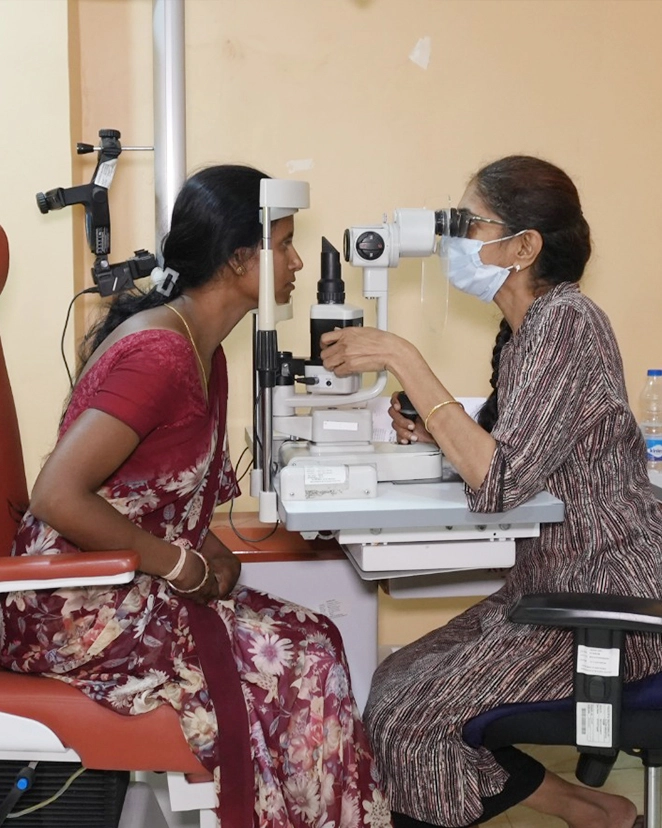
Visual acuity, refraction, intraocular pressure, corneal topography, ASOCT, tear film assessment, dilated fundus evaluation, and wavefront analysis — assessing candidacy for LASIK, SILK, ICL, or lens-based correction.
Procedure Recommendation & Counselling
Your eye specialist explains which procedure is most appropriate, expected outcomes, realistic limitations, risks, and costs. All questions welcomed — no pressure, no rushed decisions.
Vision Correction Surgery — Day Procedure
LASIK, SILK, PRK, and ICL are all performed as day procedures under topical anaesthesia. Most procedures take 15–30 minutes for both eyes; you return home the same day.
Post-Operative Care & Recovery
Complete written aftercare instructions — drop schedule, activity restrictions, and follow-up timing. LASIK and SILK patients typically achieve functional vision within 24 hours; PRK takes 1–2 weeks.
Long-Term Comprehensive Eye Care
Vision correction is one step in a lifelong relationship. We continue monitoring retina health, glaucoma, dry eye, and cataract risk at scheduled follow-up visits.
Why Should You Choose MediVision for LASIK Eye Surgery and Vision Correction?
NABH-Accredited for Refractive Surgery
Every clinical and surgical protocol meets India's highest independently certified hospital quality standards, across surgical safety, sterilisation, and post-operative care.
Complete Range, No Preferred Procedure
LASIK, SILK, PRK, ICL, and refractive lens exchange — every patient receives an honest recommendation based on their own eyes, not the most expensive option.
Experienced Across Complete Eye Health
Our refractive team is supported by expertise across retina, glaucoma, cornea, and cataract care — understanding the complete picture of ocular health, not just the refractive component.
A Genuinely Thorough Pre-Op Checkup
Topography, ASOCT, wavefront analysis, tear film assessment, and full refraction — performed by experienced eye specialist doctors, not technicians alone.
Transparently Priced
All costs communicated clearly before any decision is made. World-class comprehensive eye care, priced to be within reach for every patient.
Clear Vision Is One Consultation Away — Book Your LASIK Eye Surgery Assessment Today.
Millions of people worldwide have chosen LASIK eye surgery and advanced vision correction to reclaim clear, glasses-free vision. At MediVision, our NABH-accredited eye care hospital offers every option — LASIK, SILK, PRK, ICL, and refractive lens exchange — following a thorough comprehensive eye checkup. Whether your concern is myopia, astigmatism, hyperopia, or presbyopia, the right advanced eye treatment exists.
